The reality of robots, are they coming to replace or help us?
Share:
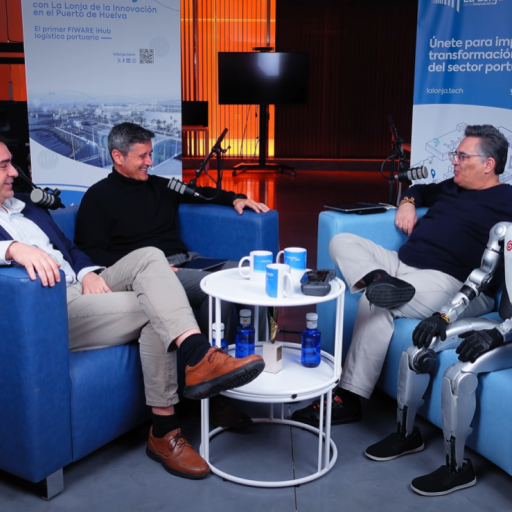
We take another step forward in the new episode of HoM: Humano o Máquina, the podcast from La Lonja de la Innovación, together with the Port of Huelva and Telefónica. We sat down at the table with Darío Samaniego, CEO of SynergyTech and official distributor of advanced robotics (Unitree), and a very special guest who doesn't breathe but does respond: the robot Aebor.
So, if you were one of those who thought the arrival of robots was just movie thing, this episode is made for you. We bring you some of the keys that Juan Marcelo Gaitán was able to draw during the interview, but we recommend you watch it in full on our YouTube channel.
Will robots replace us?
There is growing concern about the future of work with technologies like AI and robots, but who better to answer than a humanoid robot? When asked if they will replace us, Aevo's answer is blunt: "there is no battle, without a human behind me, I am just metal".
With 43 joints and the ability to make thousands of decisions per second, its message is clear: it hasn't come to replace, but to extend human potential. For Aenor, future success will depend on attitude: "the human who understands machines will win, and the one who is afraid of them will lose".
Dario Samaniego explains that we are designing robots based on ourselves. Given this, it has always been said that what differentiates humans from machines is their creative capacity and intelligence. But Juan Marcelo wonders, if we create them in our image and likeness, will they end up surpassing us in these areas too? For Darío Samaniego, when that happens, it will be the true turning point.
But Darío insists, the reality is that machines won’t replace people; trades will change. While some jobs will disappear, many others will emerge. In fact, Darío Samaniego points out a current trend: "employers ask to put a robot where they have no staff".
The jobs that will tend to disappear are those that require brute force, are harmful to the worker's health or requires a massive data collection. For better understanding, Darío gives some examples:
- Dangerous tasks. They are used in high-risk environments such as chemical industries or fires. A robot can go where a person shouldn’t, but it’s key to understand that this doesn’t eliminate the firefighter's job, but rather turns them into a robot controller.
- Intensive data collection. Agro-robots, for example, are already being used in harvests for tasks such as collecting plantation data on pests, excess moisture, or fruit quantity.
What current robots are like
On the other hand, Darío has explained that in recent years the robotics sector has taken a step further, as much more optimal articulation and mechanization have been achieved thanks to the strategic combination of three key elements:
- Advanced computing power. They have sufficient processing power for their tasks.
- Optimized battery. They have an improved energy source.
- Quality materials. Their mechanical capacity is based on the use of good materials.
But what happens with the risk of hacking? Darío addressed concerns about the security of these systems. He explained the need for a solid security system that prevents unauthorized modification of programming. To achieve this, Unitree has developed an "encapsulated system": an artificial intelligence created from scratch within a closed system, which eliminates "open lines" through which third parties could infiltrate.
If you want to know more about the future of robotics, what current robots are like and what coexisting with them will be like, don't miss the latest episode of HoM: Humano o Máquina on our YouTube channel.