HoM: Hombre o Máquina, myths about technology and collaboration between ports
Share:
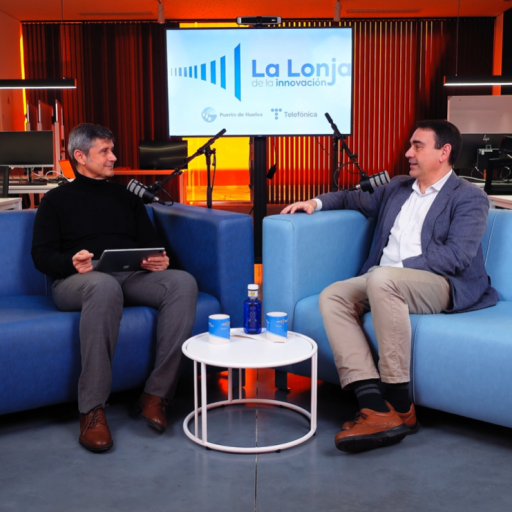
Last week we launched HoM: Hombre o Máquina, the podcast from La Lonja de la Innovación, together with the Port of Huelva and Telefónica. A space where, although technology is the protagonist, the human being has the final say.
For our premiere we had a top level guest: Mafran Martínez, CTO of Port of Huelva. If you want to delve into the reality of digital transformation in ports, why technology fails if humans aren't put in the center, or the importance of collaboration in critical infrastructure, don’t miss the first episode of HoM: Hombre o Máquina. Today, we bring you some of the key learnings we were able to obtain from him.
Artificial intelligence in ports
For Mafran Martínez, neither AI or machines will replace us. According to him, they are transforming the way we work, and that isn’t a risk. In addition, he insists that human judgment remains irreplaceable. However, AI plays a fundamental role in ports when it comes to analyzing large volumes of data or automating complex calculation processes. “There, the machine does it better than man”, says Mafran, but the person is the one who decides
Smart Ports
Technology has played a fundamental role in the improvement of ports functioning and has led to the arrival of Smart Ports. Digitalization and automation have allowed to reduce uncertainty and optimize the entire logistics chain
An example of the importance of technology in ports is La Lonja de la Innovación's commitment to FIWARE, becoming one of the two only premium iHubs in the world.
To explain how this technology works, Mafran compares it to a dictionary. FIWARE allows machines to speak the same language so the information and data flow between platforms.
Innovating in ports: thinking in networks
When we think of a port, we usually imagine ships, cranes, and goods. But, in reality, a port is much more than that: it’s a complex network of actors, infrastructures, and logistics flows.
That is why, according to Mafran, the sector is changing its way of thinking. Ports no longer compete with each other: they are increasingly collaborating. If a port has a problem, the others must help, because the ultimate goal is for the cargo to reach its destination.
In fact, Mafran highlights that Spain is at the technological vanguard in the port sector and the technology leaders must share more know-how with each other. It isn’t about being the best at everything, but about copying what others do well.
In short, this conversation with Mafran Martínez reminds us of something fundamental: in a sector as complex as the port industry, innovation is not just about incorporating new technologies, but also about changing the way we think and collaborating more.
If you have done so yet, we recommend watching the first episode of HoM: Hombre o Maquina.