
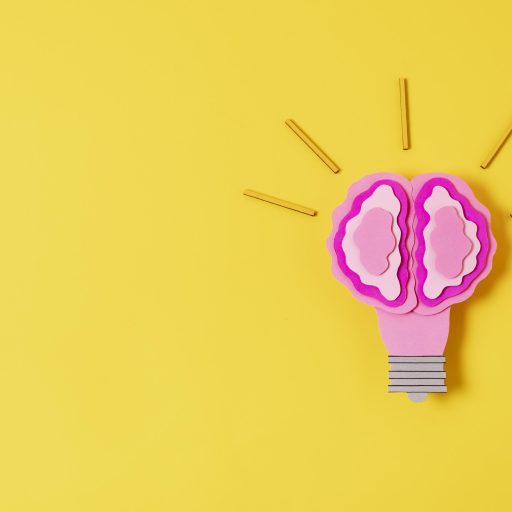
The advantages of neuroscience applied to web design
Share:
In the digital age, capturing and retaining user attention on your website has become a constant challenge. However, there are solutions that help achieve this, among them, neuroscience applied to web design. This discipline seeks to decipher how the human brain processes information and makes decisions in the online environment, allowing the creation of more attractive, intuitive and effective pages where people stay and even end up converting.
Neuroscience principles applied to web design
Within neuroscience, we find neuromarketing, a discipline that studies purchasing processes. By understanding the mechanisms that drive these actions, designers can employ strategies that lead to conversions and customer loyalty. Thus, applying neuroscience to processes like the creation of your websites can translate into increased web traffic and greater satisfaction. Some principles of neuroscience applied to web design are:
- Emotional beings. We are emotional beings, which means that many of our decisions are not guided by reason. This is why your company's website and content have to impact the senses and arouse emotions to work.
- The power of opinions. People also tend to be influenced when making decisions. For example, who hasn't stopped to look at restaurant reviews before going? We tend to be influenced by other people's opinions and recommendations, so including testimonials and reviews on your website is more than advisable.
- Minimalism. Offering many options does not satisfy the customer more, but quite the opposite. People prefer to have fewer options to make less effort, so it is essential to have a clean, minimalist and clear website that focuses on what is most important.
- Immediacy. We live in the era of immediacy, which means people want to get what they want in the shortest possible time. Therefore, processes must be simplified so that the user can achieve their goal quickly.
- FOMO (Fear of Missing Out). People are afraid of missing out on things; knowing that we can lose an opportunity motivates us to take the plunge. Therefore, if there is a limited supply of something, people will want it more, or don't those typical messages of "last units available" ring a bell?
Other key factors
In addition to the psychological aspects we have already seen, there are more crucial factors that you need to have in mind:
- The first impression is created in half a second and is very important.
- The decision to stay on a website or change to another lasts approximately one second.
- The average permanence time for most users is between 20 and 30 seconds.
Based on these elements, to design a website based on neurodesign you need to effort to achieve four fundamental principles:
- Capture users' attention in less than 5 seconds.
- Focus attention on the way you communicate, not on what you say, but on how you say it.
- Create simple and familiar designs that are easier for users to process.
- Add clear and simple content that captures the user's attention in the shortest possible time.
Applied neuroscience to web design can be a very powerful tool that allows companies to connect with their audiences in a more affective way. And you, do you use it?